





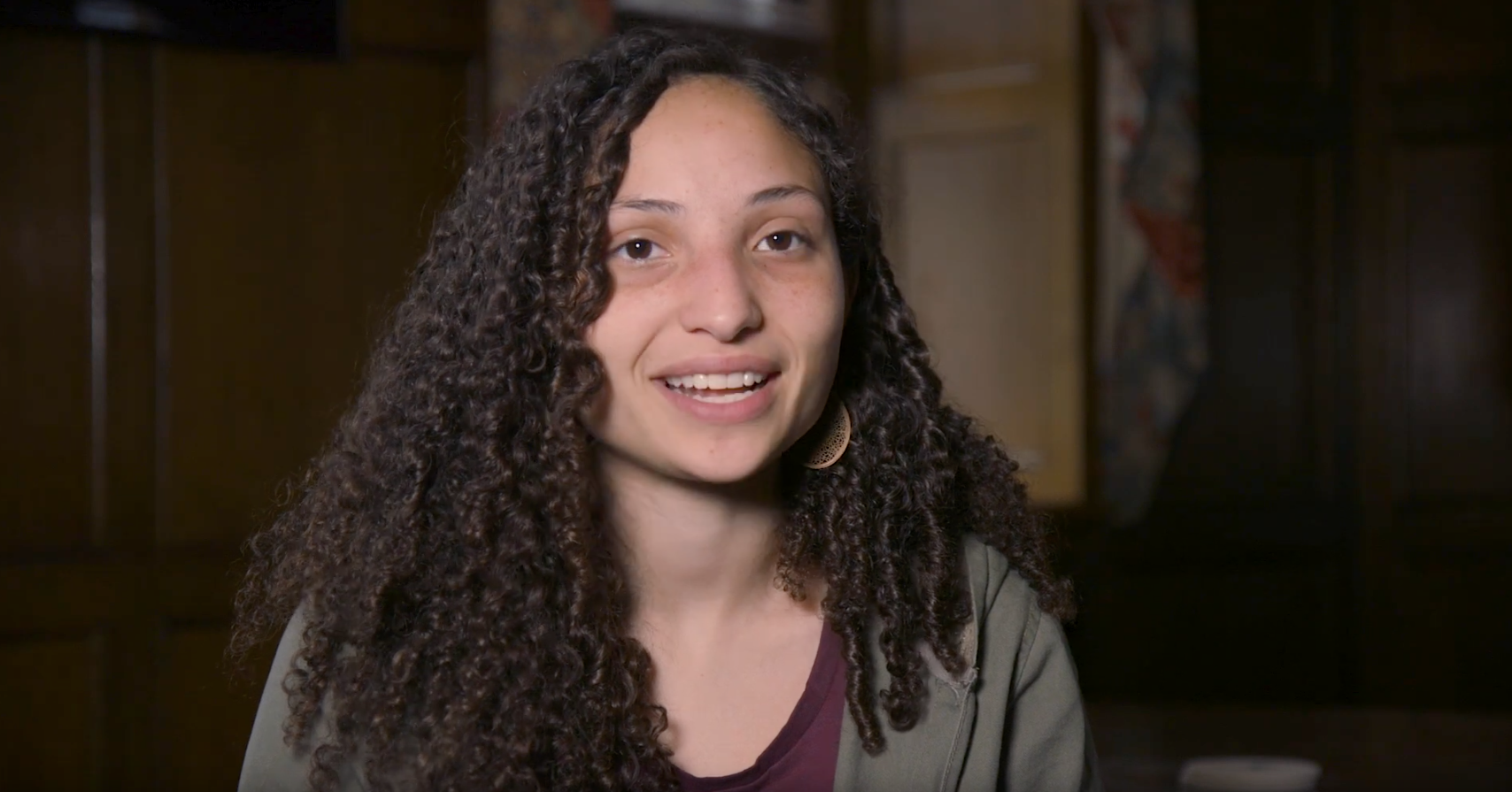



Award-Winning Art and Interdisciplinary Research Earn Scholars Varg-Sullivan Awards
This year’s Varg-Sullivan Endowed Graduate Award winners are Niloufar Fallahfar, a Spring 2026 MFA in Studio Art graduate, who is the 2026 Outstanding Achievement in the Arts recipient, and Jonah Branding, a graduate student pursuing a dual Ph.D. in Philosophy and Ecology, Evolution, and Behavior, was named the 2026 Outstanding Achievement in Letters recipient. The Varg-Sullivan Endowed Graduate Awards, presented by Michigan State University’s College of Arts & Letters, were established in honor of Paul Varg and Richard Sullivan, former Deans of the College of Arts & Letters who dedicated their professional lives to excellence in the college. Recipients

Philosophy and Theatre Major Places 2nd in Section at UURAF
Ashley Romo has won second prize in her section for her poster presentation, “A Philosophical Study of the Zoot Suit in Chicano Culture”, at the University Undergraduate Research and Arts Forum (UURAF). Her faculty mentors for this project were Dr. John Grey (Philosophy) and Dr. Dan Smith (Theatre).

Department of Philosophy Honors Award-Winning Students
On Friday April 24th, the Department of Philosophy honored three 2025-26 undergraduate prize winners at our end-of-year meeting: Satyam Sinha, winner of the Lewis K. Zerby Prize for the best undergraduate Philosophy paper, and Renée Crachiola and Isabella Foster, co-winners of the Benjamin-Miller Award for the most promising student at an early stage in Philosophy. We’re delighted to have Renée and Isabella continuing in the program, and we wish Satyam the best of luck on his post-MSU journey.